Introduction
In August 2025, the Groundwater Demand Management Network launched a “California Groundwater Community Needs Assessment Survey” (Survey) to identify priority needs for the diverse community that manages and researches groundwater.
As the Network grows into this new year, our next step is to use the survey results to inform programming to meet these needs, establish partnerships across the state, and create a comprehensive community of practice to manage California’s critical groundwater resources.
Almost 100 colleagues responded to the Survey and provided exceptionally helpful and robust input. A comprehensive Survey Report will be available later in 2026; in the meantime, here’s an initial summary.
Outcomes
Who Responded?
The topmost common respondents were:
- Technical Consultants
- Non-Profit/Non Governmental Organization Representatives
- Groundwater Sustainability Agency (GSA) Representatives
- Domestic Well Owners
- Agricultural and Domestic Land and Water Users
What is Groundwater Demand Management (GDM)?
People gave very extensive descriptions of how they describe GDM. Almost 75% think of it in terms of regulatory and statutory (i.e., Sustainable Groundwater Management Act [SGMA] contexts). Within these responses, a diverse range of “on-the-ground” examples were also described, including:
- Agricultural Irrigation Efficiency
- Allocations
- Water Conservation
- Land Repurposing
GDM Importance
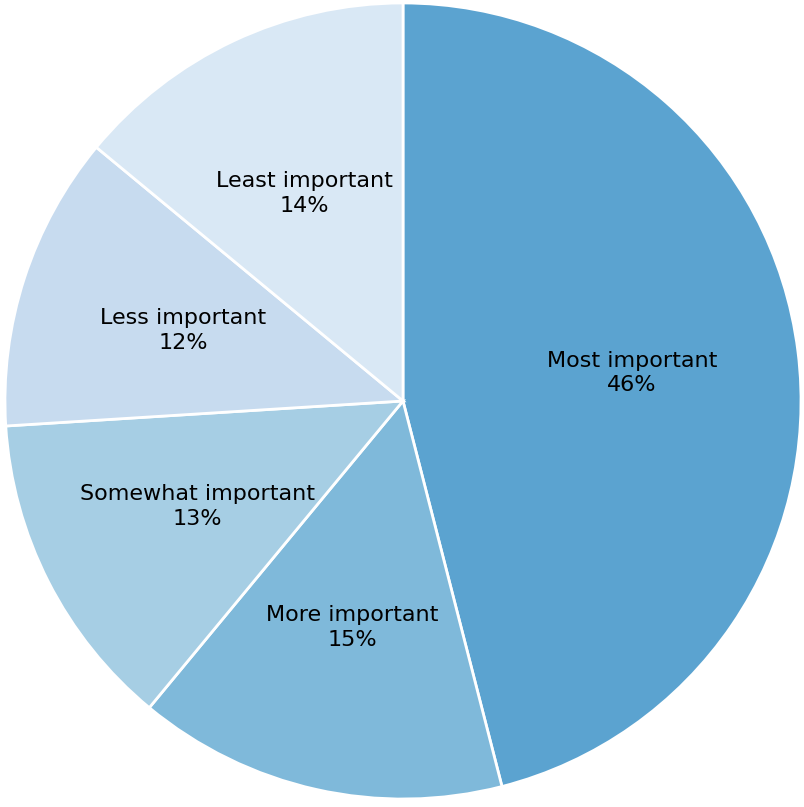
Using a 1 to 5 scale in response to the question “how important is the use of GDM for the groundwater basin(s) you live in and/or work in?” almost 50% of the respondents described GDM as most important. As shown in the figure to the right, when combined with the mid- to high range responses for this question, a total of almost 75% of respondents describe GDM as important to their basins.
GDM Challenges
When asked to list the biggest challenges experienced or expected to be experienced about GDM, the top five responses were:
- Impact on agricultural productivity and economic impacts
- Resistance and/or lack of engagement by stakeholders
- Expenses and the lack of funding to implement GDM actions
- Land use changes (i.e., fallowing, abandonment, etc.)
- Complex regulatory environment
GDM Information Needs
When asked to list the most important information needs about GDM, the top 5 responses were:
- Understand GDM policy implications and regulatory compliance
- Improve groundwater sustainability using a combination of GDM and recharge
- Learn about funding opportunities and economic incentives
- Connect and collaborate with other stakeholders and professionals working on GDM
- Learn best practices for GDM
How Can the GDM Network Provide Support?
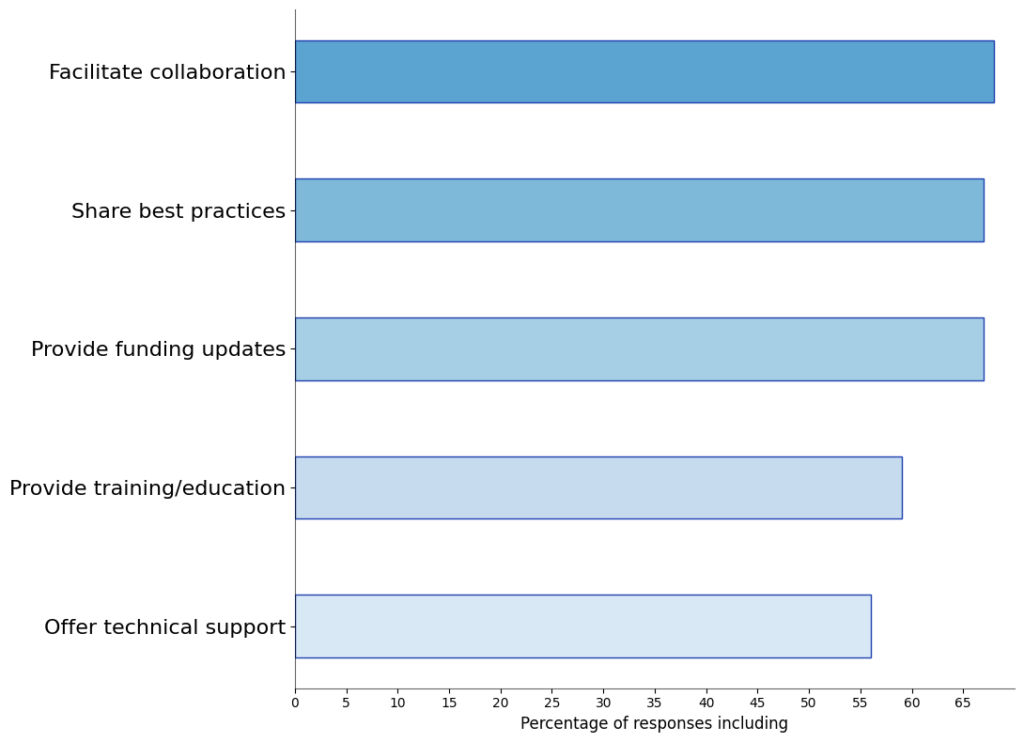
In response to how the Network can best serve the diverse community of groundwater professionals, the following were the top five responses (as also illustrated in the figure below):
- Facilitate collaboration with farmers, commodity boards, researchers, consultants, environmental justice groups, community-based organizations, and policymakers
- Provide updates on funding opportunities, grants, or financial incentives
- Share best practices and guidelines for implementing GDM
- Organize workshops, training sessions, and educational resources
- Offer technical support and access to innovative monitoring tools
GDM Approaches Most Commonly Considered
Regarding the programs and approaches that respondents most commonly consider, the top five responses were:
- Water Metering and Accounting
- Land Repurposing
- Information Gathering and Data Management Tools
- Allocations
- Sustainable Agriculture
Resources Needed for GDM Implementation
When asked to describe resources needed to successfully implement GDM, four distinct but almost equal categories emerged:
- Collaboration and Outreach Support
- Regulatory and Legal Support
- Data Management Support
- Funding Support
Conclusion and Next Steps
In 2026, the Network will launch activities to support the needs, opportunities, and concerns identified in the survey results. These results have already proved invaluable and will continue to do so as the Network grows and develops a community of practice. As noted in the introduction, we will prepare a more comprehensive report of the survey results and make it publicly available on our website. We have also built a “Resources” page into the website, where we will post presentations, reports, and other materials that provide information for our growing membership.